Turkey uses espionage accusations to pressure government critics
0 / 57
English
中文
The arrest of a German foundation's employee in Istanbul this week has put the focus back on pressure tactics used by the Erdogan administration. The arrest is far from the first of its kind.
(暂无翻译) (暂无翻译)
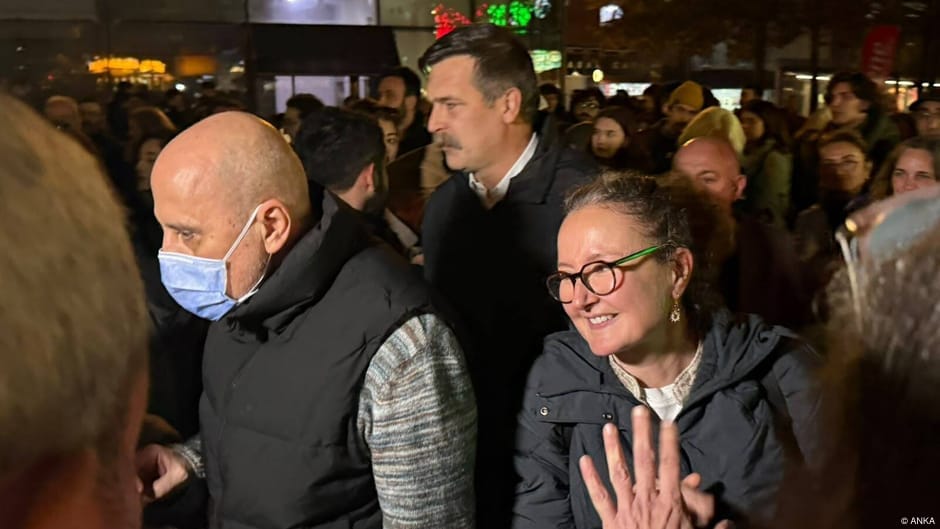
When police officers appeared at her home in Istanbul last Wednesday evening, Yonca Verdioglu Sik was surprised — even more so when they took her in for questioning. Her lawyer says she was accused of political and military espionage.
(暂无翻译) (暂无翻译)
But, according to transcripts of the interrogation that were published later, Verdioglu Sik was never asked any questions about espionage. Instead the public prosecutor's office appeared to be more interested in the activities of the German organization, the Heinrich Böll Foundation, for whom Verdioglu Sik works. For 18 years, Verdioglu Sik, who was born and raised in Germany, has been the foundation's project coordinator. In her role, she organizes projects that focus on democracy and women's, minority and LGBTQ+ rights.
(暂无翻译) (暂无翻译) (暂无翻译) (暂无翻译)
During the interrogation, transfers of money from the foundation into her bank account were discussed. Verdioglu Sik found out that she was now subject to a travel ban too.
(暂无翻译) (暂无翻译)
Verdioglu Sik was eventually released. Nonetheless her arrest caused outrage among critics of the Turkish government. Sik is married to investigative journalist and member of parliament, Ahmet Sik. He belongs to the left-wing Workers' Party of Turkey, or TIP, and is known as one of the current government's harshest critics.
(暂无翻译) (暂无翻译) (暂无翻译) (暂无翻译)
Recently Sik has been looking into a stock market scandal, which allegedly benefitted members of the ruling Justice and Development Party, or AKP, headed by Turkish President Recep Tayyip Erdogan, and their associates.
(暂无翻译)
Opposition critics drew a clear conclusion: As a member of parliament, Sik has parliamentary immunity. So instead, the justice system is putting pressure on him through his wife.
(暂无翻译) (暂无翻译)
"If you take away a state's law, what is left is no longer called a state, but a gang," Sik responded to the arrest in writing.
(暂无翻译)
Verdioglu Sik's arrest is not the first such case in Turkey. Ever since the attempted coup against the Erdogan government in 2016, accusations of espionage have been levelled at a wide variety of groups in Turkey: journalists, opposition figures and human rights activists as well as employees of foreign embassies and staff of foreign institutions like non-governmental organizations and foundations.
(暂无翻译) (暂无翻译)
Such accusations were often followed by acquittals or convictions for other offenses, albeit sometimes years later. What the many instances have in common though is what's known as a "chilling effect." Any investigation can mean lengthy pre-trial detention, reputational and professional damage and even social isolation.
(暂无翻译) (暂无翻译) (暂无翻译)
In the past such cases have even triggered diplomatic spats.
(暂无翻译)
For example in 2015, Can Dundar and Erdem Gul, both senior journalists at the opposition daily Cumhuriyet, were accused of espionage after reporting that Turkey had tried to ship arms to rebels fighting the Syrian government. Dundar now lives in exile in Berlin.
(暂无翻译) (暂无翻译)
In 2017, Erdogan said that reporter Deniz Yücel, then working for German newspaper Die Welt, was a "German agent." That led to a serious diplomatic crisis between Berlin and Ankara.
(暂无翻译) (暂无翻译)
Espionage charges have also been laid against local employees of the US diplomatic corps and against a lawyer working for the German embassy. US pastor Andrew Brunson and his wife were also arrested because of alleged links to Kurdish anti-government groups. Turkish philanthropist and human rights activist Osman Kavala, who was charged with espionage and attempting to overthrow the constitutional order, remains in prison.
(暂无翻译) (暂无翻译) (暂无翻译)
Most recently, espionage charges have been brought against the former Istanbul mayor and Erdogan's political competitor, Ekrem Imamoglu, and a number of journalists.
(暂无翻译)
Hakki Tas, a research fellow and expert on Turkey at the German Institute for Global and Area Studies, or GIGA, notes that the number of such cases have been increasing over the past few years.
(暂无翻译)
On the one hand, Turkey has the right to protect itself from foreign intelligence services — especially given geopolitical competition and conflict in the region, he argues. On the other hand, there's a long tradition of bringing the Turkish opposition to court to face security charges.
(暂无翻译) (暂无翻译)
"What foreigners or employees of foreign institutions have experienced in recent years is a continuation of this pattern," Tas told DW.
(暂无翻译)
To view this video please enable JavaScript, and consider upgrading to a web browser that supports HTML5 video Media outlets and NGOs critical of the government have faced investigations, trials and other sorts of state sanctions for years.
(暂无翻译)
The ruling AKP party has also brought in its own version of a so-called "foreign agent law." These sorts of espionage cases serve both a domestic and foreign policy function, Tas observes.
(暂无翻译) (暂无翻译)
For locals, "contact with a foreign institution, foreign funding or even a perfectly normal salary could become part of an investigation someday," Tas explains.
(暂无翻译)
"For opposition figures and civil society organizations, in particular, this can become a security issue." In terms of foreign policy, the cases also show other countries that there are limits to their activities inside Turkey.
(暂无翻译) (暂无翻译)
These kinds of accusations seem to become more frequent when there's some sort of foreign policy tension — for example, after Western criticism of how opposition groups were dealt with after the alleged coup in 2016, the aforementioned disputes about arms deliveries in connection with Syria, or criticism from abroad about the removal of elected mayors in Turkey. It can also serve as a kind of "hostage diplomacy," Tas says.
(暂无翻译) (暂无翻译)
The case of US cleric Brunson is a good example.
(暂无翻译)
After his arrest, the Turkish government proposed a trade with the Americans. They wanted to exchange Turkish preacher Fethullah Gulen, who lived in the US and who the Turkish government blamed for the 2016 coup attempt. This suspicion of foreign institutions isn't something that the Erdogan government invented, Tas points out.
(暂无翻译) (暂无翻译) (暂无翻译)
In the early 2000s, several representatives of German organizations were already standing trial in Turkey. At the time, it was alleged that, among other things, the German spy service was using German foundations as a front for conspiracy. In some of the best-known cases, defendants often don't end up convicted of espionage.
(暂无翻译) (暂无翻译) (暂无翻译)
The Kavala case demonstrates this.
(暂无翻译)
He was initially acquitted of espionage several times and spent two years in prison, just because of those charges. But Tas says that's no surprise, referring to a 1979 work about the sociology of law written by US law professor Malcolm Feeley.
(暂无翻译) (暂无翻译)
It's title: "The Process Is the Punishment." This story was originally published in German.
(暂无翻译) (暂无翻译)
To view this video please enable JavaScript, and consider upgrading to a web browser that supports HTML5 video
(暂无翻译)
仅供学习使用,如有侵权请联系删除 · 查看原文