Shivelyuch Socked In
0 / 15
English
中文
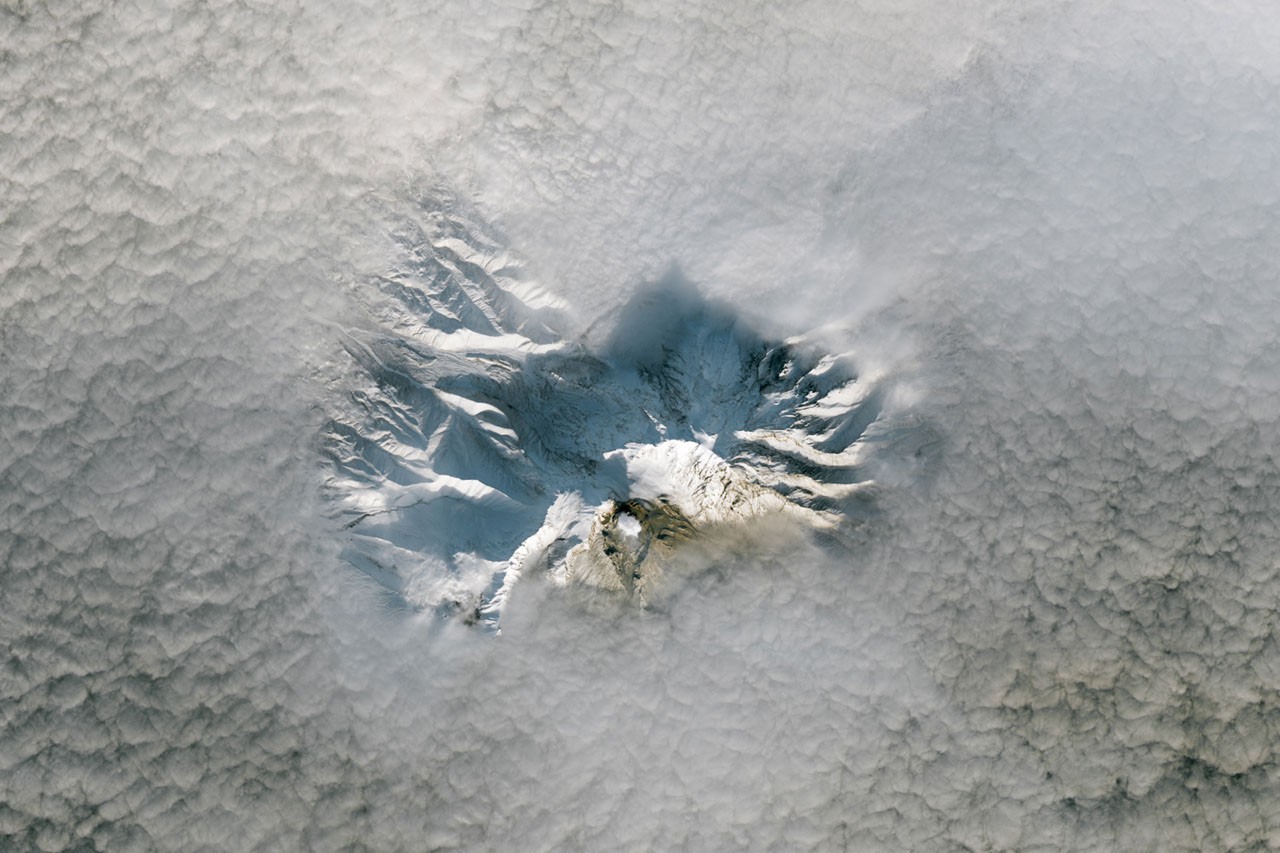
In the same way that Shivelyuch (also called Shiveluch) frequently displays volcanic activity, it is also chronically obscured by clouds. When the OLI (Operational Land Imager) on Landsat 9 captured this image on November 8, 2026, clouds encroached on the snowy mountain on Russia’s Kamchatka Peninsula. But they hovered beneath the volcano’s 3,283-meter (10,771-foot) peak, leaving a clear opening over its caldera and northern upper slopes.
(暂无翻译) (暂无翻译) (暂无翻译)
The upper reaches of Shivelyuch feature a caldera 9 kilometers (5.6 miles) wide that is open to the south. A lava dome, formed by vents extruding viscous magma, appears as a dark area within it. Lava domes on Shivelyuch go through cycles of growth and collapse, with collapses sometimes setting off fast-moving avalanches of hot ash and rock called pyroclastic flows.
(暂无翻译) (暂无翻译) (暂无翻译)
In November 2026, effusive eruptions of lava and explosive activity at Shivelyuch had been ongoing for months, according to reports from the Kamchatka Volcanic Eruption Response Team (KVERT). And despite frequent cloudiness, satellites regularly detect thermal anomalies from the volcano.
(暂无翻译) (暂无翻译)
On the day of this image, KVERT reported that a plume of resuspended ash drifted 120 kilometers (75 miles) to the east. That kind of activity is relatively tame for the mountain. Explosions from Shivelyuch periodically send ash several kilometers up into the atmosphere, where it can travel great distances and pose risks to aircraft. In July 2026, an ash plume rode the jet stream over the Bering Sea into Alaskan airspace, according to news reports, prompting the cancellation of multiple flights.
(暂无翻译) (暂无翻译) (暂无翻译) (暂无翻译)
NASA Earth Observatory image by Lauren Dauphin, using Landsat data from the U.S. Geological Survey. Story by Lindsey Doermann.
(暂无翻译) (暂无翻译) (暂无翻译)
仅供学习使用,如有侵权请联系删除 · 查看原文