Perseverance Update: The Ghostly Rocks of ‘Idubi’ — Bright Remnants of Aqueous Systems from Long Ago
0 / 10
English
中文
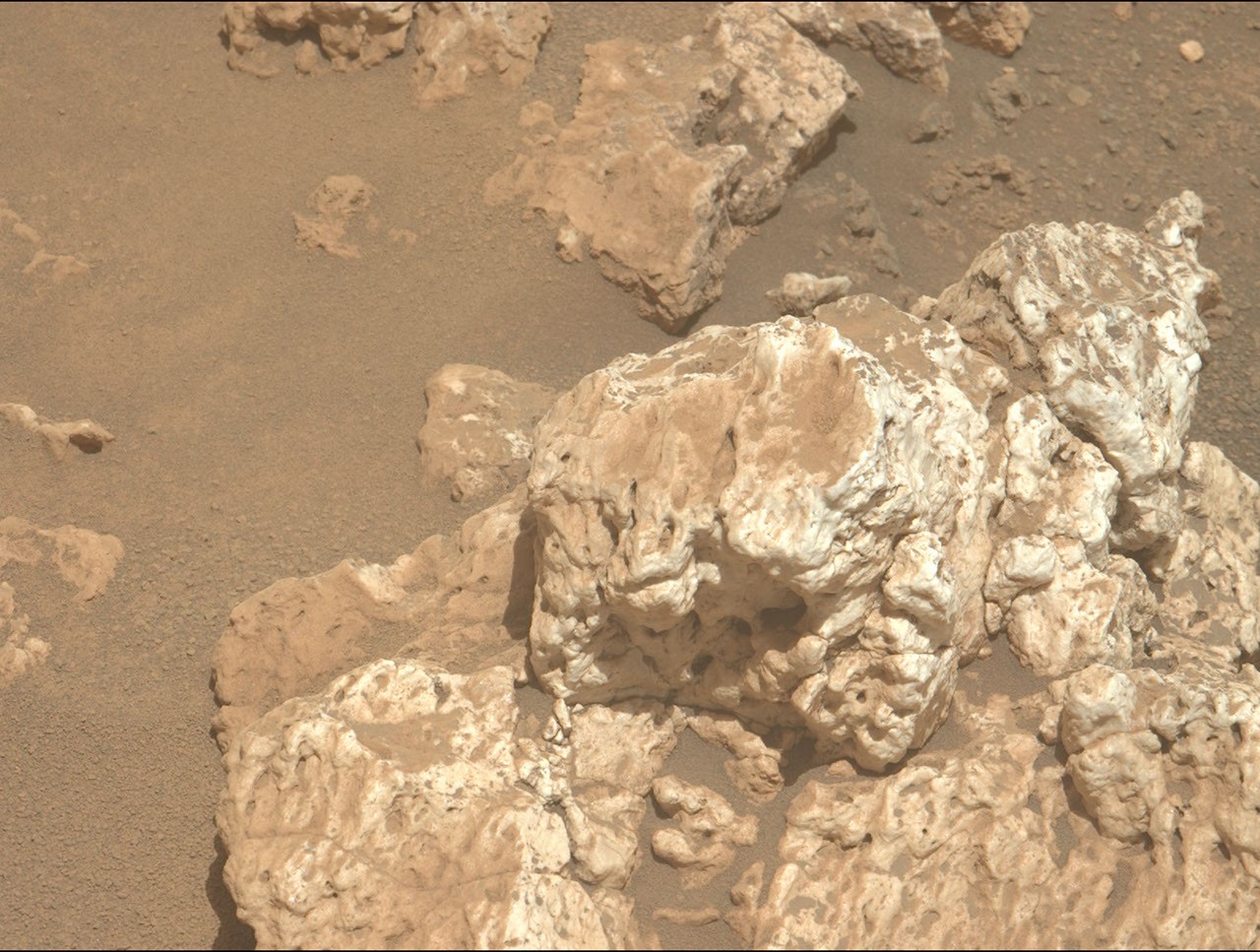
Written by Candice Bedford, Research Scientist at Purdue University During the Perseverance rover’s investigation of "Idubi" — an area of ancient Martian crust exposed in the "Lac de Charmes" region, outside of Jezero crater — the Perseverance rover team has been captivated by a cluster of eerily bright, light-toned rocks in the area.
(暂无翻译)
These bright fragments stand out sharply against the underlying darker and often dust-covered Martian surface, and are even brighter than the igneous and impactite rocks we previously investigated. Suspecting that they differed from the typical igneous rocks in the area, the rover team directed Perseverance to investigate. Newly downlinked data from the SuperCam instrument has confirmed that these light-toned rocks are not igneous in origin and instead are rich in hydrated silica. Hydrated silica can form in many aqueous environments on the Earth, including hydrothermal, pedogenic, and groundwater systems.
(暂无翻译) (暂无翻译) (暂无翻译) (暂无翻译)
As such, these types of deposits are prime targets for understanding Mars' hydrological history, as several of these environments could have been capable of supporting life. Furthermore, hydrated silica holds immense astrobiological value due to its remarkable capacity to preserve microfossils. Could these pale remnants of an ancient Martian water system hold signs of ancient life? When Perseverance previously encountered silica-rich rocks on the inner rim of Jezero Crater, the deposits were too small to deploy proximity science instruments and gather the high-resolution chemical and mineralogical data needed to constrain their origin and biosignature preservation potential.
(暂无翻译) (暂无翻译) (暂无翻译) (暂无翻译)
Fortunately, the rocks at "Idubi" offer a much more promising scale, and a detailed proximity science campaign is already underway.
(暂无翻译)
仅供学习使用,如有侵权请联系删除 · 查看原文