India's demonetization: 10 years on, economic benefits still disputed
0 / 48
English
中文
A decade after the 2016 currency ban, its impact on India's economy and the fight against black money remains contested.
(暂无翻译)
On November 8, 2016, Prime Minister Narendra Modi announced in a televised address to the nation that he was withdrawing all 500- and 1,000-rupee banknotes from circulation at midnight.
(暂无翻译)
The surprise move invalidated 86.9% of the value of currency in circulation in a single stroke.
(暂无翻译)
Modi asked Indians to make a "grand sacrifice for cleansing our country."
(暂无翻译)
He promised that the hardship would help eliminate black money, corruption, counterfeit currency and terrorist financing. The exercise was presented as a major step towards a cleaner and more transparent economy.
(暂无翻译) (暂无翻译)
Millions of Indians rushed to banks to exchange their savings. Long queues formed outside banks and ATMs, with people waiting for hours, sometimes without knowing when they would get their money.
(暂无翻译) (暂无翻译)
Workers missed wages, small businesses struggled to pay employees and families found it difficult to buy everyday essentials. Reports of people dying during the cash crisis added to the distress.
(暂无翻译) (暂无翻译)
"I still remember my domestic help's father," businessman Prakash Patra from Jaipur city told DW. "He panicked, collapsed, and passed away right there, standing in a long queue just trying to exchange his family's life savings. It wasn't just cash that was lost in those lines. It was human lives."
(暂无翻译) (暂无翻译) (暂无翻译) (暂无翻译)
To view this video please enable JavaScript, and consider upgrading to a web browser that supports HTML5 video For India's most vulnerable, particularly rural women and people without bank accounts, the sudden cash shortage made savings difficult to access.
(暂无翻译)
Money set aside for family weddings, medical emergencies and basic survival was suddenly compromised. Joe Athialy, executive director of the New Delhi-based Center for Financial Accountability, a financial watchdog, says the impact fell disproportionately on the poor and the informal economy.
(暂无翻译) (暂无翻译)
"Demonetization destroyed livelihoods, disrupted small businesses and pushed millions into deeper economic insecurity.
(暂无翻译)
The poor and those dependent on the informal sector bore the greatest cost," Athialy told DW. Arun Kumar, former professor of economics at Jawaharlal Nehru University and author of "The Black Economy in India," shared a similar assessment.
(暂无翻译) (暂无翻译)
The government wrongly assumed that illicit wealth was primarily held in cash, he said. "And it penalized the cash-dependent informal sector while leaving the real engines of the black economy untouched," Kumar told DW.
(暂无翻译) (暂无翻译)
The first major setback came in 2018, when the Reserve Bank of India (RBI) reported that 99.3% of the demonetized currency had returned to the banking system.
(暂无翻译)
Only a small fraction of the withdrawn money had failed to come back, undermining the expectation that large amounts of undeclared cash would be extinguished.
(暂无翻译)
To view this video please enable JavaScript, and consider upgrading to a web browser that supports HTML5 video A decade later, there is little evidence that demonetization made a significant dent in black money or corruption.
(暂无翻译)
Economists have long pointed out that much illicit wealth in India is held in property, gold and other assets rather than cash.
(暂无翻译)
Some supporters of the policy argued that forcing cash into the banking system would help formalize the economy and widen the tax base. But the extent to which these changes could be attributed to the currency withdrawal remains contested.
(暂无翻译) (暂无翻译)
Lekha Chakraborty, a professor at the National Institute of Public Finance and Policy, said research after the exercise pointed to limited success in achieving its stated objectives. She draws on studies that examined both the immediate economic shock and its longer-term effects.
(暂无翻译) (暂无翻译)
"The research points to modest gains against demonetization's primary objectives, alongside temporary but real economic costs.
(暂无翻译)
The impact was particularly severe in the informal sector, where cash remains central to everyday transactions," Chakraborty told DW.
(暂无翻译)
"The economic shock was real, even if much of it faded over time. But there is little to suggest that demonetization produced a lasting change in the way black wealth is generated or concealed."
(暂无翻译) (暂无翻译)
Athialy argues that the policy was based on a flawed understanding of how illicit wealth is held in India. "Cash is only an insignificant part of the black economy.
(暂无翻译) (暂无翻译)
Much of India's unaccounted wealth is held in assets such as real estate and in tax havens, not currency," he said.
(暂无翻译)
He also questions the absence of accountability for the disruption and its institutional consequences. "Nobody has been held accountable for the economic disruption or the undermining of institutions such as the RBI."
(暂无翻译) (暂无翻译)
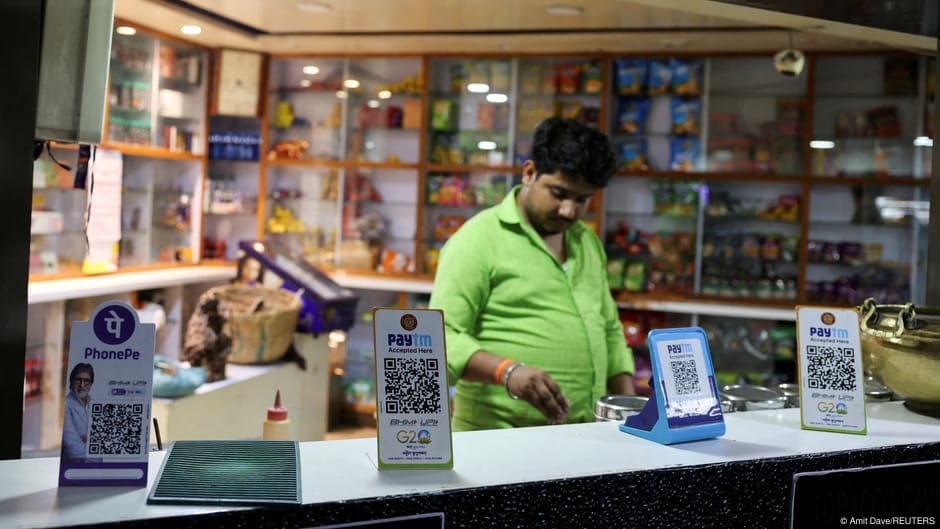
To view this video please enable JavaScript, and consider upgrading to a web browser that supports HTML5 video Digital payments have expanded rapidly since 2016.
(暂无翻译)
The Unified Payments Interface (UPI), launched in August that year, has become a major part of India's retail payment system today.
(暂无翻译)
In 2025-26, UPI processed 241.6 billion transactions, worth 314.2 trillion rupees (approximately €2.95 trillion), according to the RBI.
(暂无翻译)
Yet the growth of digital payments has not reduced the amount of physical currency in circulation. RBI data show that the value of banknotes in circulation stood at 43.15 trillion rupees (about €405 billion) on October 23, 2026, compared with 17.97 trillion rupees (€169 billion) in November 2016.
(暂无翻译) (暂无翻译)
The figures show that Indians are increasingly using digital platforms for everyday payments, but cash remains firmly in circulation.
(暂无翻译)
Chakraborty cautions against attributing the growth of digital payments to demonetization.
(暂无翻译)
"Digital payments largely continued a trend that was already under way before the currency ban," she said.
(暂无翻译)
A decade after the unprecedented move, the gap between the government's promises and what demonetization ultimately delivered remains central to its legacy.
(暂无翻译)
仅供学习使用,如有侵权请联系删除 · 查看原文