Arsenic in the water: Thailand presses Myanmar over mining pollution
0 / 28
English
中文
Thailand is seeking to tackle river pollution stemming from rare earth mines in neighboring Myanmar. The two countries held joint talks this week as a "first step towards agreeing on the evidence."
(暂无翻译) (暂无翻译)
Thailand is pushing its neighbor Myanmar to take on unregulated mining.
(暂无翻译)
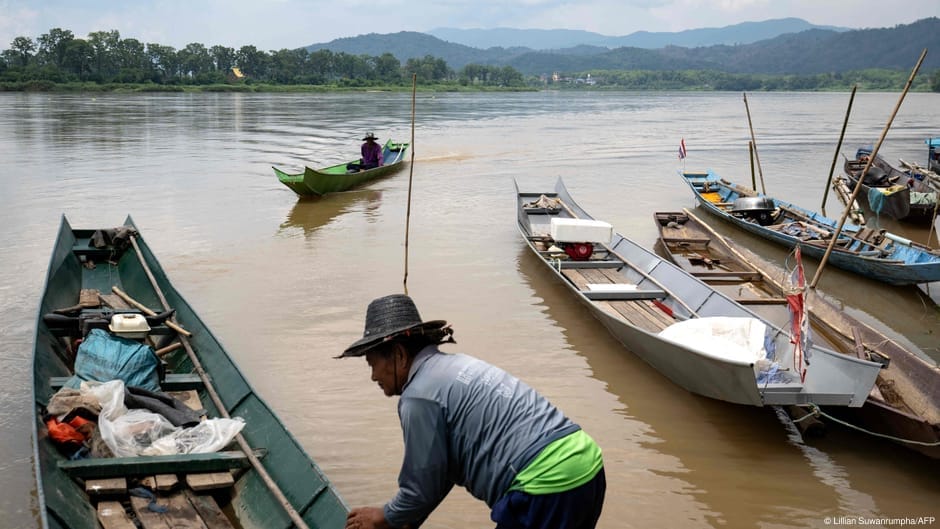
A toxic border river is putting lives and livelihoods at risk in northern Thailand. The Kok River, once rich in fish, is now polluted with arsenic, mercury, and other hazardous contaminants.
(暂无翻译) (暂无翻译)
The reason is the mining activity in the militia-controlled regions of Myanmar. Most of these mines are located in Shan state, where civil war has raged since the 2021 military coup.
(暂无翻译) (暂无翻译)
The mining activity is driven in part by China's dominant rare earth industry.
(暂无翻译)
Bangkok this week hosted the first Thai-Myanmar working group where it said tests proved rare-earth and gold mines in Myanmar were the reason of the pollution downstream. China was also present in the talks.
(暂无翻译) (暂无翻译)
The two sides agreed to joint water sampling on the Kok and Sai rivers. This will cover 12 water sampling locations and is expected to begin between December and January.
(暂无翻译) (暂无翻译)
But no public agreement was made about Thailand's request for a six-month suspension of mining operations.
(暂无翻译)
The talks follow the suspension of tap water supplies to 14 villages in Mae Sai district earlier this month, near the Myanmar border, after arsenic levels were found to be nearly 30 times higher than government limits.
(暂无翻译)
To view this video please enable JavaScript, and consider upgrading to a web browser that supports HTML5 video Bangkok is also seeking China's help in pressuring private Chinese operators, given its position as the main importer of rare-earth materials from Myanmar, as the issue grows increasingly urgent after months of concern.
(暂无翻译)
Authorities this week urged residents to avoid eating certain shellfish and other river species after tests detected dangerous levels of arsenic and lead in northern and northeastern Thailand.
(暂无翻译)
"Arsenic does not come from nature, it came from mining sites.
(暂无翻译)
The source was from (Myanmar's) Shan state, no-one disagrees," Thai Deputy Prime Minister Yodchanan Wongsawat said at the joint talks. However, finding a solution remains a challenge.
(暂无翻译) (暂无翻译)
Thanapon Piman, senior research fellow at the Stockholm Environment Institute (SEI), told AFP, "This is going to be a first step to agree on the evidence, otherwise you cannot move to the next step, like stopping mining activity.” But Myanmar intervening to stop mining would be "really difficult," he added.
(暂无翻译)
Several ethnic armed groups have been active in the region for decades, while the civil war is still ongoing.
(暂无翻译)
To view this video please enable JavaScript, and consider upgrading to a web browser that supports HTML5 video Thai authorities point to two gold mines across the border from Mae Sai as the main contributors to elevated arsenic levels in the Sai River.
(暂无翻译)
The broader region is divided among various groups, including Myanmar's military and the United Wa State Army, an ethnic armed group closely aligned with China.
(暂无翻译)
The main mining belts are currently outside the control of Myanmar's military-backed government, including sites in Shan State.
(暂无翻译)
Thai authorities are also seeking to assess whether pollutant mines are under the control of Myanmar's government or other entities, Deputy Prime Minister Yodchanan told Reuters.
(暂无翻译)
"We also would like them to check whether they can control every mine or they cannot.
(暂无翻译)
If they cannot, we will ask China to help,” he said.
(暂无翻译)
A spokesperson from China's foreign ministry told AFP that Beijing "pays close attention" to the pollution issue and would provide technical support.
(暂无翻译)
仅供学习使用,如有侵权请联系删除 · 查看原文