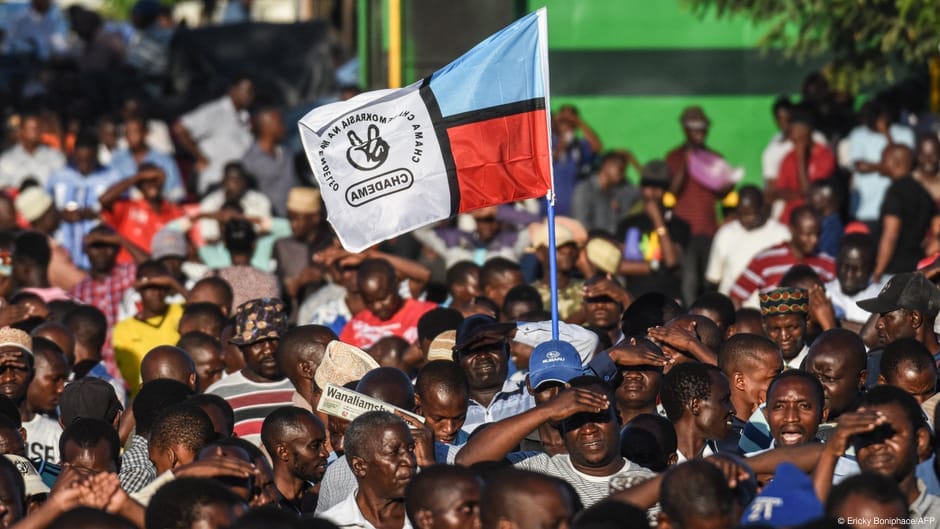
Africa's opposition voices face growing pressure
0 / 48
English
中文
Opposition politicians and government critics say arrests, prosecutions and restrictions on public activity are making it harder to challenge those in power. Is a broader pattern emerging?
(暂无翻译) (暂无翻译)
From Cameroon and Tanzania to Mozambique, Nigeria and Zambia, opposition leaders have accused authorities of limiting political freedoms through legal action and restrictions on public activity.
(暂无翻译)
In each case, officials have said the measures are justified under national laws and security provisions.
(暂无翻译)
"Cameroon is very sensitive, and it is important that we know when to criticize the government and when not to criticize the government openly," said Ngam Glory Ani Mbom, a citizen of the central African country.
(暂无翻译)
She said fear of arrest and violence discourage political participation. "You cannot talk about democracy when opposition supporters cannot freely express their minds to the public," she told DW.
(暂无翻译) (暂无翻译)
For Ndah Grimbald, deputy secretary-general of Cameroon's opposition Social Democratic Front, one of the biggest obstacles is organizing public meetings.
(暂无翻译)
"The first major challenge we face as members of the opposition is the non-authorization of public rallies, public meetings," he said, noting that opposition proposals receive little attention in parliament. "Private members' bills are not even listened to."
(暂无翻译) (暂无翻译)
Cameroonian law guarantees freedom of assembly but allows authorities to restrict gatherings on grounds of public order or national security. Organizers are also required to notify officials in advance.
(暂无翻译) (暂无翻译)
In Tanzania, opposition leader Tundu Lissu was arrested in April 2025 and charged with treason. In November 2026, the High Court acquitted Lissu of treason but convicted him of incitement and sentenced him to four years in prison.
(暂无翻译) (暂无翻译)
Prosecutors argued that Lissu's remarks were intended to disrupt Tanzania's 2025 general election. In its ruling, the court said it was satisfied that his statements were intended to "disrupt elections and instigate violence."
(暂无翻译) (暂无翻译)
Lissu rejected the verdict, calling the case "political persecution." He told the judges: "I was not charged with incitement but you judges are convicting me with it just to impress the person who gives you the titles." He added: "Excuses were created to imprison me."
(暂无翻译) (暂无翻译) (暂无翻译)
To view this video please enable JavaScript, and consider upgrading to a web browser that supports HTML5 video Gerson Msigwa, Tanzania's chief government spokesperson, directly rejected allegations of political repression and human rights violations.
(暂无翻译)
"Concerns of diminishing civic space and restrictions on political parties to engage in political processes in the lead-up to the general election are unfounded and misleading," Msigwa said in response to Amnesty International's accusations of a "wave of terror" sweeping Tanzania ahead of the 2025 vote. In Mozambique, opposition figure Venancio Mondlane faces five charges linked to protests after the disputed 2024 election, including incitement to terrorism and public advocacy of crime.
(暂无翻译) (暂无翻译)
Prosecutors have accused him of encouraging violence and civil disobedience. Mondlane has denied the allegations. To view this video please enable JavaScript, and consider upgrading to a web browser that supports HTML5 video "I have more than enough evidence.
(暂无翻译) (暂无翻译) (暂无翻译)
There's plenty to go around.
(暂无翻译)
Many of my statements were precisely in the opposite direction," he told DW, adding that the protests were intended to prevent violence. Pedro Sinai Nhatitima, a judge counselor and spokesperson for Mozambique's Supreme Court, defended the court's decision not to allow live broadcasts of Mondlane's trial. He denied that the proceedings are politically influenced, saying the court will decide the case according to the law.
(暂无翻译) (暂无翻译) (暂无翻译)
In Nigeria, police in Borno State recently arrested five men wearing T-shirts bearing the slogan "Tinubu Must Go!" The police said the men were not arrested for their political views, but were found with suspected drugs and other items.
(暂无翻译) (暂无翻译)
The men face allegations including public disturbance and thuggery.
(暂无翻译)
In Kano, police blocked access to a venue for a planned meeting, citing public safety concerns. In Zambia, opposition leader Brian Mundubile has criticized what he describes as a retreat from democratic rights.
(暂无翻译) (暂无翻译)
The courts were closed on August 24, the final day for filing a presidential election petition.
(暂无翻译)
The judiciary cited security reasons, while police said intelligence-led security assessments were underway at several government institutions. State House presidential aide Clayson Hamasaka denied that President Hakainde Hichilema had ordered the closure to prevent an election challenge. To view this video please enable JavaScript, and consider upgrading to a web browser that supports HTML5 video The same month, former opposition lawmaker and cabinet minister Mutotwe Kafwaya was shot dead during a security operation at Mundubile's residence.
(暂无翻译) (暂无翻译) (暂无翻译)
Authorities said the operation followed intelligence about individuals considered a national security threat, and that officers came under gunfire and returned fire.
(暂无翻译)
Mundubile, who faces treason and sedition charges with other opposition figures, has called for fairness in the proceedings.
(暂无翻译)
"We expect an open court process. We are innocent of all the charges against us," he said.
(暂无翻译) (暂无翻译)
Zambian constitutional lawyer Linda Kasonde has warned: "As you can see, our public institutions are on trial. Democracy in Zambia is on trial." Cameroonian political analyst Kinang Derick Fai said that despite the setbacks, democratic development across the continent remains a work in progress.
(暂无翻译) (暂无翻译) (暂无翻译)
"We are far from getting to the best level," he said. "It is a democracy still struggling to find its way."
(暂无翻译) (暂无翻译)
DW correspondent Moki Edwin Kindzeka contributed reporting.
(暂无翻译)
仅供学习使用,如有侵权请联系删除 · 查看原文